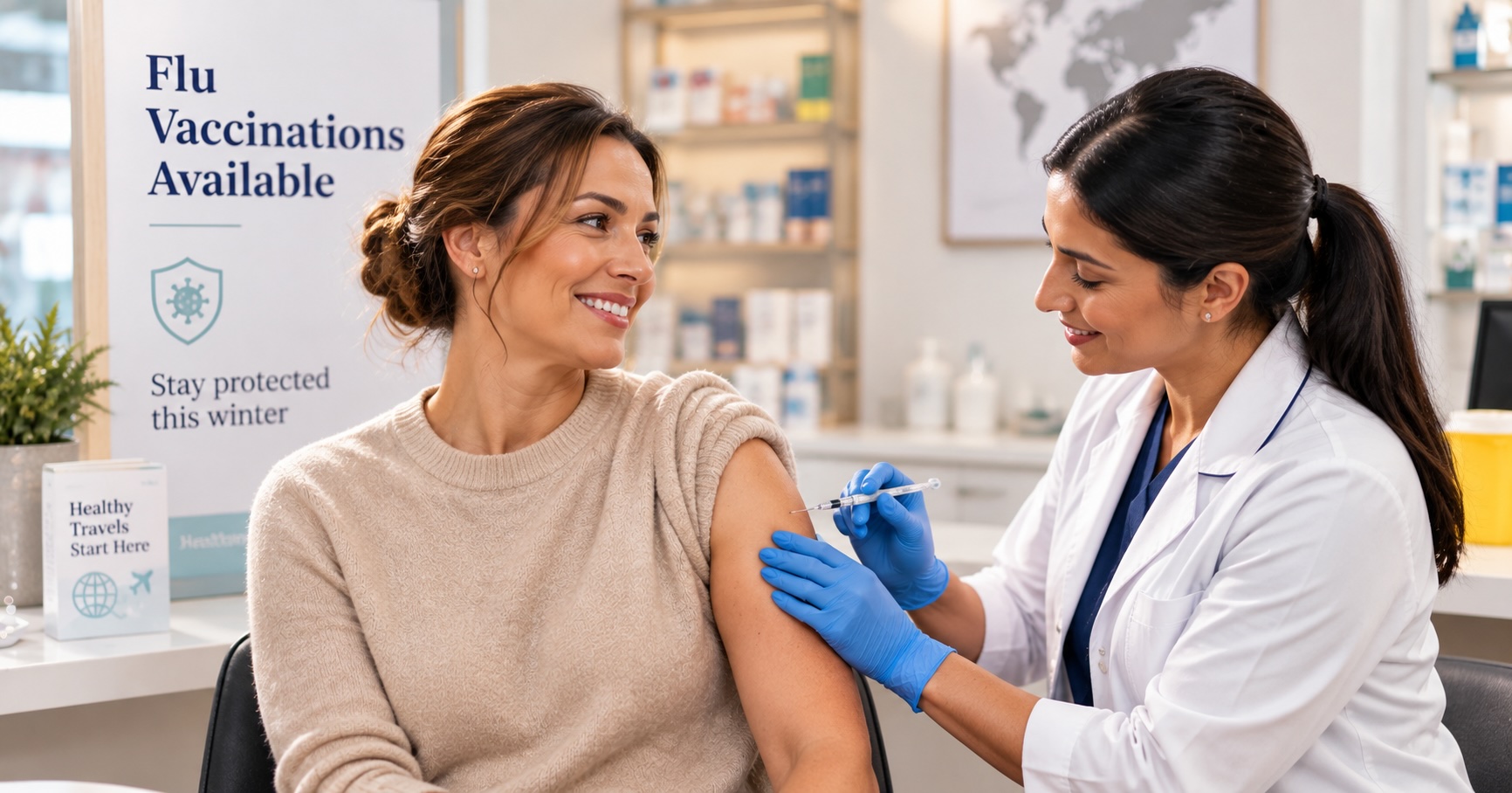
Ideally, arrange travel-health advice at least 4–6 weeks before you travel. Starting around eight weeks ahead gives you even more flexibility—especially if your itinerary is complex, you need several vaccines or a course involves more than one dose.
But a late booking does not mean you should give up. If your flight is in a few weeks, a few days or even tomorrow, contact a travel clinic as soon as possible. A last-minute consultation can still identify priorities, explain what protection may be achievable and cover other precautions relevant to your trip.
Best practical window: begin checking around 8 weeks before travel and aim to see a travel-health professional at least 4–6 weeks before departure. Leaving sooner? Book promptly rather than assuming it is too late.
When should you book travel vaccinations?
The NHS and TravelHealthPro advise seeking travel-health guidance ideally at least four to six weeks before travelling. This window matters because some vaccines take time to stimulate an immune response, while others may involve a course with intervals between doses.
FCDO travel-planning guidance encourages travellers to check vaccinations and health precautions at least eight weeks before departure. These recommendations are complementary: eight weeks is a sensible point to begin researching, while four to six weeks is the latest ideal window for arranging professional advice.
The strongest planning position. Check every destination and stopover, locate your records and book an assessment.
The standard recommended consultation window. There is time for many schedules and for protection to develop.
Book promptly. Options may remain, but the clinician may need to prioritise according to your itinerary and risk.
Still seek advice. Some interventions and practical precautions may remain useful, although full protection cannot be assumed.
Why do travel vaccines need to be given in advance?
Protection takes time
Your immune system needs time to respond. The amount of time varies according to the vaccine and the individual.
Some need several doses
Certain recommendations involve a course rather than a single appointment, with clinically defined intervals.
Records need checking
Previous doses may still count. Reviewing your history can prevent unnecessary repetition and reveal gaps.
Certificates may matter
Some journeys involve formal vaccination evidence or timing rules that should be checked well before travel.
Why the right timing differs between travellers
There is no universal appointment date for every traveller. A clinician considers the vaccine schedule alongside your precise risk. Two people travelling on the same day may need different plans because their destinations, health histories or activities are different.
Your complete itinerary
Recommendations can vary within a country and can be affected by stopovers, border crossings and onward travel. Bring every destination, not only the place where you will spend the most time.
Your style and length of travel
A short hotel stay may involve different exposure from rural work, backpacking, volunteering, visiting friends and relatives or a long multi-country trip. Season, accommodation and access to medical care can also influence urgency.
Your personal health
Age, pregnancy, immune-system conditions, allergies, medicines and previous reactions can affect what is appropriate. Some travellers should seek advice earlier from their GP, specialist or travel-health professional.
Your existing vaccination record
Some previous vaccinations provide longer-term protection, while others may require another dose depending on current guidance. Take reliable records where possible; the NHS App or your GP practice may help.
Travelling soon? Do not assume you have missed your chance
Last-minute travel is common. Although starting earlier is better, a short-notice assessment can still be worthwhile. Depending on your destination, health and departure date, the consultation may cover vaccines that remain appropriate, malaria prevention, insect-bite avoidance, food and water precautions, animal exposure and what to do if you become unwell.
Hampstead Travel Clinic offers same-day and last-minute appointments where available. Availability and suitable clinical options depend on the day, your itinerary and an individual assessment.
What happens at a last-minute travel consultation?
The aim is not to rush into every possible vaccine. It is to make a proportionate plan using the time available. Your clinician will identify the most important risks, check which recommendations can still be acted upon and be clear about any limitations.
Your itinerary is reviewed
Countries, regions, dates, stopovers, accommodation and activities are assessed together.
Your health history is checked
Previous vaccines, medical conditions, allergies, medicines and individual considerations are discussed.
Priorities are explained
You receive a tailored plan, including what may be possible now and what protection cannot be guaranteed.
Wider precautions are covered
Advice may include malaria, insects, food and water, animals, insurance and care if symptoms develop.
How to prepare before contacting the clinic
Having the right information ready makes a short-notice assessment more useful. Write down every country and stopover, exact travel dates, accommodation, planned activities and whether you will spend time in rural or remote areas. Find any vaccination records you have and list your current medicines and relevant medical history.
Check the current TravelHealthPro country information and FCDO advice for every destination, but avoid choosing vaccines from a generic list. Online destination pages support—rather than replace—an individual clinical risk assessment.
Frequently asked questions
Is one month before travel enough time for vaccinations?
One month falls close to the recommended four-to-six-week window, so arrange advice immediately. Whether it is enough depends on your vaccines, previous doses, health and itinerary.
Can I get travel vaccinations two weeks before departure?
You should still book a consultation. Some options may remain appropriate, but full protection cannot be assumed and some courses require more time.
Can I get vaccinated the day before travelling?
A same-day assessment may still provide useful advice and, in some circumstances, an appropriate intervention. However, many vaccines need time to build protection. The clinician will explain realistic benefits and limitations.
Can several travel vaccines be given at one appointment?
Some vaccines can be given during the same visit. Suitability and timing depend on the products involved and your individual assessment.
Should children be booked earlier?
Early advice is particularly useful for family travel because age, routine immunisations and vaccine suitability need individual review.
What if I cannot find my vaccination history?
Check the NHS App or ask your GP practice where possible, but do not delay contacting the clinic. Explain what you know and bring any partial records.
Travelling sooner than planned?
Contact our Hampstead or Kilburn travel-health team as soon as possible. Same-day and last-minute appointments may be available, subject to capacity and clinical suitability.